






As organizations work to reduce energy consumption, improve system performance and meet sustainability objectives, power conversion efficiency is becoming an increasingly important design consideration.
In this blog, our Global Director of EHS & Sustainability explores how power supply efficiency, product innovation and informed design choices can reduce energy losses and support sustainability goals.
Overview
• The impact of power supply efficiency on energy use and heat generation
• XP Power’s Product Carbon Rating Framework for assessing efficiency and power losses
• The role of SiC, GaN and thermal technologies in improving efficiency
• The contribution of efficient power conversion to system performance and sustainability goals
At XP Power, we recognize that power conversion efficiency plays a critical role in product performance and long-term sustainability. We continue to invest in high efficiency power solutions and advanced technologies that help customers reduce operational energy losses and make informed product selection decisions.
This commitment has led to the development of high efficiency product families and XP Power's Product Carbon Rating Framework (PCRF), which helps customers evaluate product efficiency and identify solutions with lower operational power losses.
Why power supply efficiency is so important
No power conversion process is 100% efficient. As electrical energy is converted from one voltage or current level to another, some input power is inevitably lost as heat. These losses affect system efficiency, thermal performance and overall energy consumption.
The resulting heat must be managed through appropriate thermal design, often requiring additional cooling that consumes energy, increases system complexity and can affect long-term reliability.
For equipment operating continuously or at high power levels, even modest efficiency improvements can have a meaningful impact over the product's operational lifetime.
Higher efficiency power supplies offer several advantages
Improving power supply efficiency can deliver several benefits at both product and system level, including:
• Reduced input energy consumption for a given output power
• Lower power dissipation and heat generation
• Reduced cooling demand and fan power requirements
• Improved overall system energy efficiency
• Greater power density through reduced thermal constraints
• Improved reliability through lower operating temperatures
• Reduced emissions associated with electricity consumption
XP Power's Product Carbon Rating Framework
Recognizing the growing importance of energy efficiency, we developed the Product Carbon Rating Framework (PCRF) to provide greater transparency into product performance and support sustainable design choices.
The framework classifies products into five categories: Bronze, Silver, Gold, Platinum and Titanium. These provide a consistent way to assess product efficiency and operational power losses, helping customers compare solutions against their performance and sustainability requirements.
A practical approach to assessing power performance
The framework reflects how power supplies are used in real-world applications. By evaluating efficiency under representative operating conditions, the PCRF provides information that customers can use to assess the energy impact of their designs.
Balancing efficiency with other design requirements
Product selection involves more than efficiency alone. Customers must balance performance, functionality, size, thermal requirements and cost. By offering products across multiple performance categories, XP Power helps engineers select solutions that meet their application requirements while supporting energy efficiency goals.
Expanding visibility across the power chain
The framework also provides XP Power with a consistent way to track the efficiency of new product introductions and support its long-term net-zero ambitions.
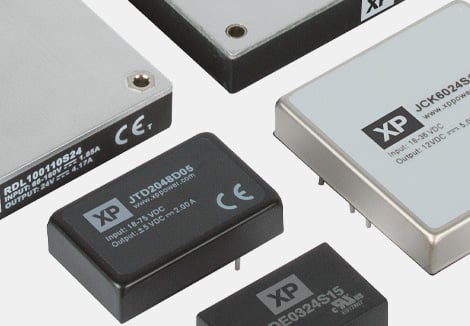
Initially covering AC-DC power supplies, the PCRF has now been expanded to include low voltage DC-DC converters. This enables engineers to assess efficiency across more of the power conversion chain and identify further opportunities to reduce losses and improve system performance.
Innovation focused on higher efficiency
Improving efficiency remains a key driver of product innovation. Recent launches have included numerous Gold, Platinum and Titanium-rated product families that deliver higher efficiency and lower operational losses.
Advances in power semiconductor technologies, including silicon carbide (SiC) and gallium nitride (GaN), are enabling improvements in efficiency, power density and thermal performance. These technologies can reduce conversion losses and support more compact product designs.
Innovation in thermal management and lifecycle performance
New thermal management approaches and flexible cooling options allow designers to optimise solutions for different applications while maintaining efficiency and reliability.
For example, analysis of the FLXPro platform demonstrated approximately 20% better in-use efficiency than an earlier design. Improvements in operational efficiency outweighed increases in embedded product emissions, resulting in a lower overall lifecycle impact.
Supporting customer sustainability objectives
Improving power conversion efficiency can help organizations meet their energy management and emissions reduction objectives by reducing operational losses and electricity consumption.
Higher efficiency power supplies can also reduce waste heat, improve reliability and simplify thermal management. The PCRF gives customers a practical way to identify products with stronger energy performance, while helping XP Power track efficiency improvements across its portfolio.
Through product innovation, advanced technologies and transparent performance ratings, XP Power is helping customers make informed decisions that support operational performance and sustainability goals.

Rachel Sandeman
Rachel joined XP Power in 2022 as a Content Specialist. She brings more than 16 years of PR and marketing experience promoting engineering and technology companies, and building strong relationships with industry editors and media partners.


